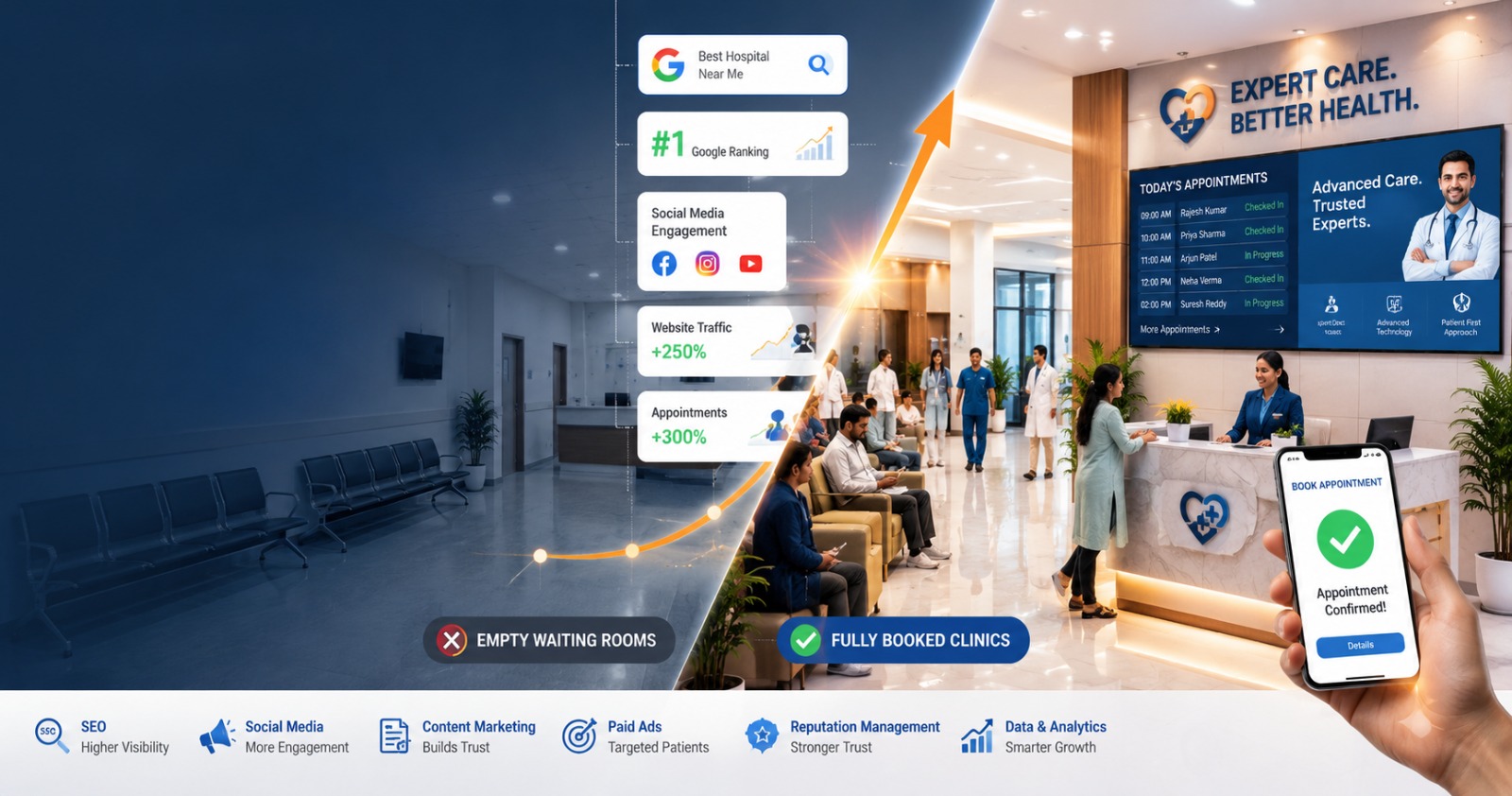
Nowadays, excellent medical care isn't enough to keep patients coming back. Even when they offer quality healthcare, hospitals and clinics struggle with low patient traffic, poor online visibility, and empty waiting rooms.
On the other hand, smart hospitals are experiencing the opposite. Their appointment calendar is full, patients are calling, and their online reputation is growing. How do they do it?
Marketing strategies for healthcare are the answer.
Modern healthcare marketing helps hospitals reach patients online, where they spend most of their time. Patients now choose healthcare providers based on Google searches, social media, and video content.
Hospitals relied mostly on newspaper ads, banners, flyers, and word-of-mouth referrals a few years ago. Patients' behavior has changed dramatically since these methods were developed.
Patients today search online before making healthcare decisions. Before booking an appointment, they compare hospitals, read reviews, check doctor profiles, and watch videos.
It doesn't matter how good a hospital's medical services are if it doesn't have a digital presence.
That's why digital healthcare marketing is so important.
Visibility is the first thing successful hospitals focus on.
Patients search for terms like:
● "Best hospital near me"
● "Best orthopedic doctor"
● "Laser treatment for varicose veins"
● "Emergency hospital in Hyderabad"
They usually go with providers on the first page of Google.
Having a professional website with strong SEO (Search Engine Optimization) can help hospitals rank higher and attract more patients.
An effective healthcare website should include:
● Doctor profiles
● Treatment information
● Online appointment booking
● Patient testimonials
● Mobile-friendly design
● Fast loading speed
● Clear contact details
A hospital's website can build trust immediately and convert more visitors into patients.
One of the most powerful tools in healthcare marketing is local SEO.
Most patients prefer local hospitals and clinics. Google Business Profiles help hospitals show up in local search results and on maps.
This helps increase:
● Phone calls
● Website visits
● Direction requests
● Appointment bookings
Positive patient reviews are also important. A hospital with a good rating and consistent reviews gets more patients.
Some hospitals grow faster than others because of content marketing.
It's common for patients to search online for health information like:
● Symptoms
● Treatment options
● Recovery tips
● Preventive care
● Latest medical technologies
By publishing blogs, videos, FAQs, and educational content, hospitals position themselves as experts.
For example, articles like:
● "Latest Laser Treatments for Varicose Veins"
● "How to Prevent Knee Pain"
● "Signs You Should Not Ignore After a Heart Attack"
can attract thousands of potential patients through Google searches.
Trust starts before a patient even arrives at the hospital through educational content.
It's no longer optional for healthcare brands to use social media.
Instagram, Facebook, and YouTube help hospitals connect directly with patients.
Successful hospitals use social media to share:
● Doctor expertise
● Patient success stories
● Health awareness tips
● Treatment videos
● Hospital achievements
● Behind-the-scenes content
Video marketing is super powerful. When doctors explain treatments professionally, patients feel more confident.
In a competitive healthcare market, hospitals need social media activity to stay visible.
Many patients check online reviews before booking an appointment.
Patients can make decisions based on a hospital's Google reputation.
Hospitals that manage their reputation actively do these things:
● Encouraging happy patients to leave reviews
● Responding professionally to feedback
● Addressing patient concerns quickly
● Maintaining strong patient communication
Reviews increase trust and improve local search rankings.
Paid advertising can deliver results fast, while SEO and content marketing take time.
Hospitals now use:
● Google Ads
● Facebook Ads
● Instagram campaigns
● YouTube video ads
To target patients looking for specific treatments.
Patients searching online for laser varicose vein treatment can see targeted ads from a hospital offering that treatment.
Leads are highly qualified, and appointment conversions are higher.
Today's fastest-growing hospitals aren't always the biggest. They're just adapting faster to digital patient behavior.
Health care marketing is more than just advertising - it's about:
● Building trust
● Educating patients
● Improving visibility
● Creating patient engagement
● Offering a seamless online experience
The hospitals that invest in modern healthcare marketing attract more patients, build stronger brands, and drive long-term growth.
We're in a digital era in healthcare. Online, patients can find, evaluate, and choose hospitals.
From SEO and social media to reputation management and video marketing, hospitals are using digital strategies to fill empty waiting rooms.
To grow sustainably, hospitals and clinics need healthcare marketing.